
 By
By 
Frankfurt is one of Europe’s largest data center markets and a central hub of the continent’s network infrastructure. The region is home to dozens of data centers, telecom carriers, cloud providers, and DE-CIX Frankfurt, one of the world’s largest Internet Exchanges.
This position was not created by a single advantage. Frankfurt sits at the center of major European backbone networks, has a highly developed interconnection ecosystem, and has accumulated a critical mass of carriers and customers over several decades. This combination is also one of the main reasons companies choose colocation Frankfurt when they need direct access to a dense European network ecosystem. Once many networks are already present in the same city, it becomes attractive for new participants to locate there as well.
At the same time, Frankfurt faces a major constraint: the availability and cost of electricity. Its position as a data center hub is therefore better explained by a combination of connectivity, network density, geography, and the network effect of an established ecosystem rather than by cheap resources.
Frankfurt Is Part of the Core European Data Center Market
Europe’s largest data center markets are traditionally grouped under the acronym FLAP or FLAP-D: Frankfurt, London, Amsterdam, Paris, and Dublin.
Within this group, Frankfurt and London are among the leading markets in terms of infrastructure capacity. According to a CBRE forecast, by the end of 2025 the combined capacity of these two markets was expected to reach approximately 2.5 GW – around half of the supply across Europe’s largest data center markets.
But Frankfurt’s importance is not determined by MW capacity alone.
The city has developed one of Europe’s densest interconnection ecosystems. Data centers are connected to carriers, Internet Service Providers, content networks, and cloud platforms. Hosting a server in Frankfurt therefore provides access to a large number of networks within a single metro region.
Connectivity is what distinguishes a major digital hub from a city that simply has a large number of data centers.
DE-CIX as the Center of the Network Ecosystem
A key component of Frankfurt’s infrastructure is DE-CIX Frankfurt.
An Internet Exchange allows independent networks to exchange traffic through shared infrastructure instead of sending it exclusively through upstream transit providers.
Today, more than 1,000 local, regional, and global networks are connected to DE-CIX Frankfurt. The platform is available in more than 30 data centers across the Frankfurt metro area, while its Cloud Exchange provides connectivity to more than 50 cloud service providers.
A large number of connected networks creates more opportunities for peering and direct routing between the infrastructures of different participants. This produces a network effect: carriers and content providers want to be present where their partners and customers are; data centers benefit from additional demand; and new companies choose Frankfurt because of its existing connectivity. Over time, this process reinforces itself.
Why Frankfurt’s Geographic Location Matters
Frankfurt is located in central Europe and is well connected to the continent’s largest economic regions. This matters for network infrastructure because the physical length of a route affects latency. Signals cannot travel through fiber instantaneously, so the distance between a server and a user creates an unavoidable component of network delay.
Its central location makes Frankfurt a convenient point from which several European markets can be served simultaneously.
However, geography is only the beginning of the route. A server in Frankfurt does not automatically guarantee low latency to every European user. Packets may pass through different carriers, transit providers, and Internet Exchanges, while BGP does not select routes based solely on physical distance.
Actual latency therefore depends on a combination of:
physical distance + peering + routing + congestion + provider network quality.
This is where Frankfurt’s high density of network connections becomes more important than its position on the map alone.
Peering Can Shorten the Network Route
Suppose a server and the end user’s network are geographically relatively close to each other. This does not necessarily mean that traffic will travel directly between them.
Without suitable peering, traffic may first enter a transit provider’s network and pass through additional intermediate points.
If both networks are present at the same Internet Exchange and exchange traffic directly, the route can potentially become shorter. This can reduce latency and dependence on intermediate transit networks.
This is why having a major IX close to a data center has practical value for hosting infrastructure.
However, a data center’s connection to DE-CIX does not by itself guarantee a specific latency. It is necessary to examine how the hosting provider’s network connects to the IX, which networks it peers with, and which routes are actually used to reach the regions relevant to the customer.
Frankfurt Is Well Suited for More Than Internet Traffic
A modern data center hub needs to provide connectivity not only to the public Internet.
Enterprise infrastructure may require private connections between data centers, direct connectivity to public clouds, and links to offices and other infrastructure sites. The more carriers and cloud networks are present in one region, the more options there are for building such an architecture.
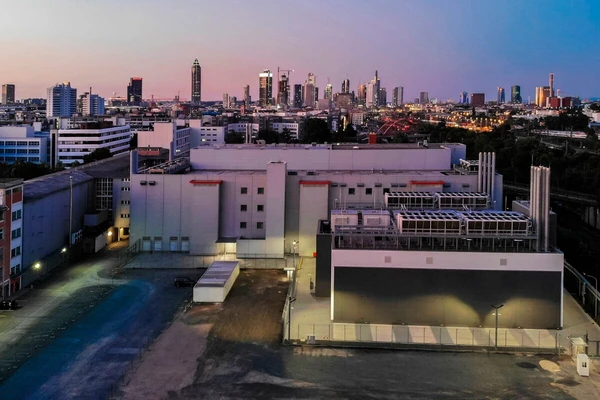
Within the Frankfurt ecosystem, Internet transit, peering, cross-connects, and private cloud connectivity can be combined. This makes it possible to use the city not simply as a place to host servers, but as a node within distributed infrastructure.
For example, a company’s Dedicated Server or equipment in Colocation may operate in Frankfurt while individual services run in a public cloud. Private connectivity can be established between them without sending all internal traffic over the public Internet.
Electricity Is a Constraint, Not a Competitive Advantage
If data center locations were selected solely on the basis of electricity costs, Frankfurt would not necessarily be the optimal choice.
Data centers consume large amounts of electricity, so power prices directly affect operating costs. The availability of new power capacity has also become a significant challenge for major European hubs.
CBRE has identified a shortage of available power as one of the main constraints on further growth in Europe’s largest markets. Combined with high demand, this also affects the cost of new data center capacity.
It would therefore be incorrect to explain Frankfurt’s growth by cheap electricity.
Its advantages developed despite this factor. For many workloads, the value of connectivity, access to a large number of networks, and an established infrastructure ecosystem can outweigh the opportunity to obtain cheaper electricity in another region.
This is particularly true for infrastructure where network performance and proximity to users are important.
Which Services Are Particularly Sensitive to Latency?
A difference of several or several dozen milliseconds has a different impact depending on the workload. For backups or background data processing, a small increase in latency may be practically irrelevant. Interactive services have much stricter requirements.
Latency is particularly important for:
- SaaS and web applications with frequent interactions between the client and server;
- online gaming and other real-time applications;
- voice and video communications;
- financial systems;
- APIs with a large number of sequential requests;
- distributed databases and infrastructure that actively exchanges data between locations.
For such systems, not only average latency but also its stability matters. A short and predictable route is often more valuable than high nominal bandwidth combined with inefficient routing.
Frankfurt is attractive in this respect not because a server located in the city automatically provides minimum latency, but because there are many connectivity options to networks serving different European markets.
Carrier-Neutral Data Centers Provide More Routing Options
Another element of the established ecosystem is the presence of carrier-neutral data centers. Instead of being tied to a single operator, customers can choose between multiple carriers and build connectivity according to their requirements for routing, bandwidth, redundancy, and cost.
This also makes it possible to use several carriers simultaneously. If one upstream provider experiences problems, an alternative connection reduces the infrastructure’s dependence on a single network.
For business-critical systems, this flexibility may be more important than a small difference in rack space costs. Frankfurt’s high concentration of carriers makes this type of multi-carrier architecture easier to build: the required operators are already present in the region and are often directly available within major data centers.
Redundancy Should Exist Beyond the Data Center
Redundant UPS systems, generators, and A/B power feeds protect infrastructure against some types of physical failure, but service availability also depends on the network. If a server is connected to the Internet through a single carrier, a failure of that connection can make otherwise fully operational equipment inaccessible.
For critical workloads, redundancy should therefore be evaluated across the entire chain:
server → switch → data center network → carrier → external network.
In a mature interconnection hub, it is easier to build multiple independent routes through different operators. However, simply being located in Frankfurt does not create redundancy automatically – it only provides more opportunities to implement it.
Particularly critical infrastructure may also require geographic redundancy, with a secondary system deployed in another data center or metro region. In this case, Frankfurt becomes one node in a distributed architecture rather than the only infrastructure location.
Why New Data Centers Continue to Be Built Near Existing Ones
At first glance, it might seem more logical to build new facilities in locations where land and electricity are cheaper. But the data center market is strongly influenced by the benefits of concentration.
Customers need carriers; carriers go where their customers are; cloud providers establish connection points near major network hubs; and new data centers seek access to the ecosystem that has already developed.
This creates an infrastructure cluster that is difficult to reproduce quickly in a new region. As a result, the importance of the Frankfurt metro area extends beyond the administrative boundaries of the city itself. New facilities can be located farther from the center, where land and power capacity may be easier to obtain, while maintaining high-speed connectivity to the region’s main interconnection points.
The hub therefore continues to grow not only through construction within Frankfurt itself, but also through the expansion of the surrounding metro ecosystem.
Power Capacity Is the Main Constraint on Further Growth
As the cluster grows, supplying new data centers with sufficient electricity becomes increasingly difficult.
Modern facilities require tens of MW, while AI and high-density computing further increase power density requirements. The ability to construct a building does not necessarily mean that the required electrical capacity can be obtained within the necessary timeframe.
Grid connection availability is therefore becoming one of the key factors shaping market development. This creates a paradox: high demand confirms Frankfurt’s attractiveness as a location while simultaneously making further infrastructure expansion more difficult and expensive.
As a result, some new capacity is shifting outside the densest areas or toward alternative European regions where power and land are easier to obtain.
Frankfurt Is Not Always the Optimal Location
Frankfurt’s status as a major data center hub does not mean that it should be chosen for every project. If the primary audience of a SaaS product is located, for example, in the UK, hosting infrastructure closer to those users may provide a more suitable network profile. For a project that consumes large amounts of electricity but is not sensitive to latency, a lower-cost region may also be more economically attractive.
Another factor is capacity availability. A particular project may require dozens of racks or a high-density deployment that can be obtained more quickly and easily at another location.
A location should therefore be selected based on a combination of factors:
user geography → latency → connectivity → power availability → required density → cost → data location and redundancy requirements.
Frankfurt is particularly strong when connectivity and access to the European network ecosystem are high priorities.
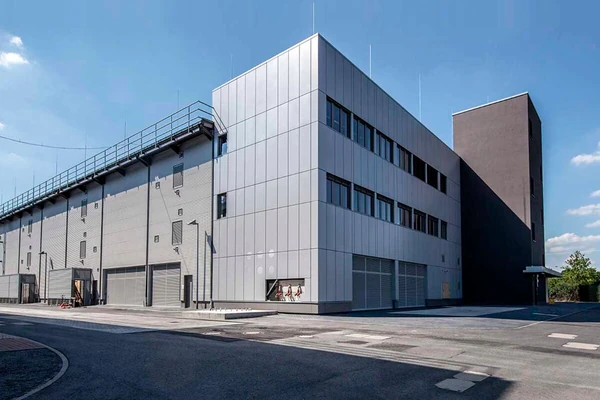
Why Frankfurt Became One of Europe’s Leading Data Center Hubs
Frankfurt’s position developed through a combination of several factors. Its central European location provided a strong foundation for a network hub. DE-CIX and the high concentration of carriers strengthened connectivity. Data centers, cloud providers, and customers then concentrated around these networks, creating an economy of scale that continues to attract new infrastructure.
This mature ecosystem makes it possible to build shorter routes, choose between multiple carriers, implement redundant connections, and connect physical infrastructure with other European locations.
In this sense, Frankfurt became a leading European data center hub not simply because it has a large number of servers. Servers concentrate there because networks are already concentrated there – and networks continue to arrive because the servers, services, and their customers are there.











Comments