
 By
By 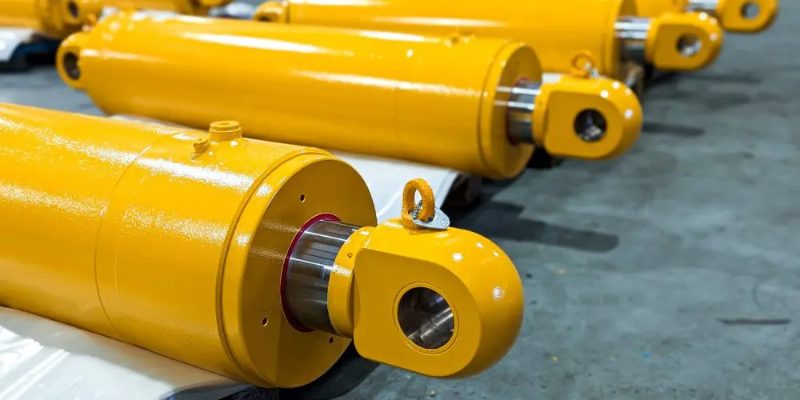
Across diverse industrial applications, hydraulic cylinder systems require reliable pumping solutions. Vane Pumps use rotating vanes within a housing to generate fluid flow as a positive displacement device. These mechanisms excel in environments requiring smooth operation and precise fluid delivery. Their design principles enable sustained performance while maintaining energy conservation standards that modern industries demand.
Balanced pressure distribution
The pumping system works through rotational movement that spreads force evenly on all parts. The rotor turns inside the housing and creates motion that moves hydraulic fluid from the inlet point to the outlet side. Centrifugal force pushes each vane outward until it touches the cam ring and forms closed chambers for smooth flow. This steady contact keeps fluid from leaking between chambers. It helps maintain pressure and flow during the working cycle. Balanced motion reduces friction between moving parts. It keeps the system efficient for long operation. The even spread of load also helps prevent early wear and extends the service time of each unit.
Compact footprint
Space constraints in modern machinery require pumping solutions that maximize output without consuming excessive installation area. The cylindrical design inherent to these systems packages substantial displacement capacity into remarkably small envelopes. Manufacturing facilities benefit from this space efficiency when integrating multiple hydraulic circuits into confined equipment frames. The reduced size translates directly to weight savings, particularly valuable in mobile equipment where every kilogram affects fuel consumption and transport logistics. Installation flexibility increases as mounting configurations adapt to available space rather than dictating machine layout.
Operational noise reduction
Acoustic comfort is increasingly important in industrial environments. These pumping mechanisms generate minimal sound emissions compared to alternatives through their smooth displacement action:
- The gradual expansion and compression of fluid chambers eliminates the abrupt pressure spikes that create cavitation noise in other designs
- Multiple vanes sharing the displacement load distribute energy transfer across numerous small events rather than concentrated high-amplitude pulses
- The absence of reciprocating components removes the mechanical impact sounds associated with piston-based systems
- Balanced internal forces prevent structural vibrations that would otherwise radiate through mounting surfaces into surrounding equipment
- The continuous flow characteristic dampens pressure ripples that excite resonance in downstream piping networks
Lower noise levels indicate efficient energy transfer within hydraulic systems. The use of acoustics enables proactive maintenance scheduling before mechanical failure occurs.
Variable displacement capability
Adjustable output mechanisms allow these systems to match fluid delivery precisely to instantaneous demand. By altering the eccentricity between the rotor and the cam ring, displacement changes occur without stopping the prime mover. This adaptability conserves energy during partial load conditions when full capacity exceeds requirements. Controls interface seamlessly with modern automation systems, enabling real-time flow adjustments. The rapid response characteristics support dynamic applications where load conditions fluctuate continuously. Operators maintain precise control over actuator speeds and force application throughout work cycles.
Efficiency in hydraulic cylinder systems depends on how well the pump output suits the system’s needs. Each feature works together to keep the operation steady under different working conditions. This setup helps reduce power use and limits the need for frequent service. These attributes make such pumping solutions practical choices for applications prioritising smooth operation and space optimisation.











Comments