
 By
By 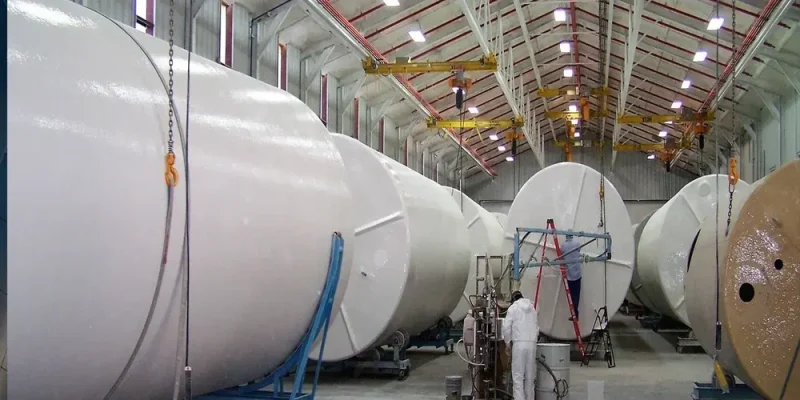
If you manage a fuel storage site – a service station, a fleet yard, an airport ramp, a hospital or data center backup system – you’ve probably faced this question at some point: is it time to replace the tank, or does it still have years left?
There’s no single number that applies to every situation. But there is a well-established range, backed by decades of field data, regulatory history, and material science.
The Range Most of the Industry Agrees On
Across environmental engineering literature and state UST (underground storage tank) programs, the working assumption is that most underground fuel tanks last somewhere between 20 and 30 years before they need to be closed, relined, or replaced. Some systems fail well before that mark. Others – particularly those built from corrosion-resistant materials and maintained properly – keep operating safely for 40 years or more.
The gap between those numbers isn’t random. It comes down to three things: what the tank is made of, what’s protecting it from the surrounding soil, and how consistently it gets inspected.
Steel Tanks: Strong, But Vulnerable to Corrosion
Steel has been the default material for underground fuel storage for generations, and for good reason. It’s strong, relatively affordable, and well understood by installers.
Its weakness is corrosion. An unprotected steel tank sitting in moist or acidic soil can develop pitting and wall thinning within 15 to 20 years. Add cathodic protection – either a sacrificial anode system or an impressed current system – along with a factory-applied corrosion-resistant coating, and that same tank can reasonably run for 30 years or more.
This is why virtually every steel UST installed since the late 1980s includes some form of cathodic protection. At this point, it isn’t an upgrade; it’s the baseline.
Fiberglass Tanks: Built for the Long Haul
Fiberglass-reinforced plastic (FRP) tanks sidestep the corrosion problem almost entirely, since the material doesn’t rust. That’s a big part of why they’ve become common in retail fueling and industrial storage over the past few decades.
Typical service-life estimates for FRP tanks run from 30 to 40-plus years. Interestingly, the part that tends to wear first usually isn’t the structural shell – it’s the internal resin liner, which can degrade before the tank wall does. Catching that early, through routine tank-tightness testing, often allows for relining rather than a full replacement.
Why the Regulatory Backdrop Matters
Tank lifespan isn’t purely an engineering question. It’s also shaped by federal rules that have reset the industry’s baseline more than once.
The U.S. Environmental Protection Agency issued its first comprehensive underground storage tank regulations in 1988, requiring corrosion protection, leak monitoring, and proper closure procedures for the roughly two million tanks then in service nationwide.
Those rules were substantially revised in 2015, adding requirements around secondary containment, operator training, and more frequent testing. The current federal framework is outlined on the EPA’s underground storage tank program page.
Inspection standards reinforce the same pattern. The Steel Tank Institute’s SP001 standard, widely used to satisfy EPA and state spill-prevention requirements, assigns inspection intervals based on how well a tank is protected – unprotected tanks may need evaluation every five years, while tanks with both cathodic protection and secondary containment can go up to 20 years between full inspections, according to STI/SPFA’s published standard.
Put simply, the better the protection system, the longer a tank is allowed to stay in service – and that lines up closely with what field data actually shows.
Signs a Tank Is Nearing the End of Its Service Life
A handful of warning signs tend to show up before a tank becomes a genuine liability:
- Fuel odors near the tank pad or fill area
- Soil that’s suddenly softer, sunken, or discolored
- Repeated failures on tank- or line-tightness tests
- Inventory reconciliation numbers that don’t add up over time
- Monitoring equipment flagging unexplained pressure or level changes
None of these guarantee a tank has failed. But taken together, they’re usually reason enough to bring in a qualified inspector rather than wait for a confirmed leak.
Maintenance Habits That Actually Extend Service Life
The tanks that outperform their expected lifespan tend to share a few habits, regardless of brand or design.
Regular cathodic protection testing catches corrosion-system failures before they become tank failures. Scheduled tank-tightness testing – typically every few years, more often as a tank ages – flags small leaks while they’re still inexpensive to address.
And keeping inspection documentation current isn’t just a compliance formality; it’s often the fastest way to spot a slow-developing problem across multiple tanks at one site.
Planning a Replacement, Rather Than Reacting to One
When a tank does reach the end of its usable life, most facility owners move in the same general direction: double-wall construction, built-in interstitial monitoring, and materials chosen for the specific product being stored and the specific soil conditions on site.
That’s also where working with an experienced fabricator tends to matter more than people expect. Manufacturers such as Tex Tanks, which works across fuel, biofuel, and chemical storage applications out of Austin, Texas, typically get involved early in a replacement project – helping match tank material and containment design to a site’s soil chemistry, throughput, and applicable state regulations, rather than treating it as an off-the-shelf purchase.
For facilities weighing steel against fiberglass, or single-wall against double-wall, that kind of early input can shape which underground fuel tank system actually makes sense for the next 30 years, not just the next five.
The Bottom Line
Twenty to thirty years is a reasonable planning assumption for most underground fuel tanks, but it’s exactly that – a planning assumption, not a guarantee. The factors that actually determine outcome are material choice, corrosion protection, and how seriously a site treats routine inspection.
Tanks installed with the right protection systems, tested on schedule, and monitored consistently often outlast their design life by a decade or more. Tanks that skip those steps rarely make it to year twenty without a costly surprise.
For facility owners, the more useful question usually isn’t “how long do tanks last?” It’s “what’s the inspection and protection history of the specific tank I’m responsible for?” That number is the one that actually predicts what happens next.









Comments