
 By
By 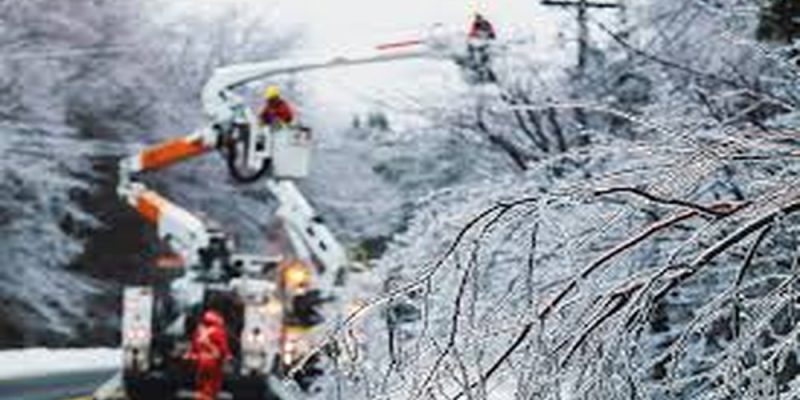
If you’ve lived in Texas long enough, you know the sound of a coming storm isn’t just the thunder-it’s that eerie, low hum of the wind picking up across the plains right before the lights flicker and die. For most folks, that’s the cue to find the candles and wait it out. For us? That’s the “go” signal. But here is the thing: working on 13kV lines is dangerous enough in the daylight. Doing it at 3:00 AM, in a horizontal rainstorm with the wind trying to buck you out of the air, is a whole different animal.
In those moments, your most valuable lineman supply isn’t just your grit; it’s your ability to see what the heck you’re doing. This is where the Bucket Lantern and a professional Linemen’s Lighting System earn their keep. We aren’t just talking about a glorified flashlight here. We’re talking about the difference between a successful fuse replacement and a catastrophic mistake hidden in the shadows.
The Night Shift: Why Standard Lighting Just Doesn’t Cut It
When you’re up in the air, shadows are the enemy. A standard headlamp is great for finding your keys, but it creates “tunnel vision.” You see exactly what you’re looking at, but everything in your periphery-the neutral wire, the guy wire, or that neighboring phase-is draped in pitch black. In the utility world, what you don’t see is usually what bites you.
A dedicated Linemen’s Lighting System is designed to flood the entire workspace with high-CRI (Color Rendering Index) light. Why does that matter? Well, if you’re trying to distinguish between a weathered red wire and a brown one, cheap LED lights will wash those colors out into a muddy gray. Professional lineman accessories like a high-end Bucket Lantern ensure that colors stay true, helping you navigate complex transformer banks without the guesswork.
Tools of the Trade: Lighting Up Your Lineman Tools
Think about the hand tools you use every day. When you’re reaching for your electrical hot stick, you’re often extending ten to fifteen feet away from your body. If your light source is mounted only on your head, the “throw” of that beam might not reach the end of your hot sticks with enough clarity to see if a cutout is properly seated.
A Bucket Lantern usually clamps directly to the lip of the bucket or mounts to the tool “bustle.” This positioning is key. It places the light source below your eye level or to the side, which drastically reduces the “glare back” you get from rain, sleet, or dust. It’s the same reason you don’t turn on your high beams in a fog-you want the light hitting the target, not bouncing back into your retinas.
Specific lineman equipment that benefits from high-octane lighting includes:
- Crimpers: Ensuring the die is perfectly aligned on the sleeve.
- Lineman Impact Wrenches: Locating the nut on a darkened crossarm without fumbling.
- Skinning Knives: Because nobody wants to be “guessing” where the insulation ends and the conductor begins in the dark.
The Physics of Storm Restoration: Why We Need Portable Power
According to various industry safety studies, the risk of a “second point of contact” accident increases by nearly 30% during night-shift emergency restorations compared to daylight hours. Fatigue plays a role, sure, but visibility is the primary culprit. When we talk about lineman tools, we usually think of things that cut or crimp, but a Linemen’s Lighting System is a preventative safety tool.
Modern lanterns have moved away from the old halogen bulbs that used to get hot enough to melt your gloves. Today’s Bucket Lantern uses cool-running LEDs and Lithium-Ion batteries. This is a game-changer for lineman supply logistics. If your light runs on the same battery platform as your impact wrench and your Crimpers, you’ve just simplified your life. No more hunting for “D” cells in the truck cab while the rain is pouring down your neck.
The “Third Hand”: Ergonomics in the Air
Space is at a premium in a bucket. You’ve got your lineman equipment, your bolt bags, and probably a few pieces of scrap wire taking up floor space. You don’t have a spare hand to hold a flashlight. This is why a professional Linemen’s Lighting System is designed for “hands-free” operation.
Whether it’s a magnetic base that sticks to the metal hardware or a heavy-duty clamp designed for the fiberglass rim, these lineman accessories stay where you put them. They provide a stable, 360-degree flood of light that mimics daylight. This allows you to use your hand tools with both hands, maintaining better control and reducing the physical strain on your shoulders and back.
The Resilience of Professional Gear
Let’s be honest: Texas weather is hard on gear. A “consumer-grade” work light will last about ten minutes in a coastal salt-spray environment or a Panhandle dust storm. Professional lineman supply items are built with IP (Ingress Protection) ratings that mean they can take a literal power-washing and keep on shining.
When you’re investing in a Bucket Lantern, you’re looking for:
1. Impact Resistance: It will get dropped or knocked against the pole.
2. Runtime: It needs to last as long as the storm does.
3. Versatility: Can it be used as an area light on the ground if you have to hop out to check a pad-mount transformer?
Conclusion
At the end of the day, we’re out there to keep the lights on for everyone else, but we can’t do that if we’re working in the dark ourselves. A high-quality Bucket Lantern and a reliable Linemen’s Lighting System are just as vital to a lineman tools setup as a pair of climbers or a sturdy belt. They provide the clarity needed to use our hot sticks and hand tools with the precision the job demands. So, the next time the clouds turn black and the call comes in, make sure your lighting is ready to cut through the dark. After all, the best way to handle a dangerous job is to see the danger coming before it arrives.
Unique FAQs
1. Why shouldn’t I just use a high-powered headlamp instead of a Bucket Lantern? While a headlamp is great for “spot” work, it causes high-contrast shadows. A Bucket Lantern provides “ambient” or “flood” light, which fills in the shadows and allows you to see the entire work area, significantly improving situational awareness.
2. How long do the batteries usually last in a professional Linemen’s Lighting System? Most pro-grade systems are designed to run for 4 to 8 hours on a high setting and up to 12+ hours on a low setting. Since most linemen carry spare batteries for their lineman equipment, you can easily swap them out for infinite runtime.
3. Are these lights safe to use near high-voltage lines? Yes, provided they are rated for utility work. Professional lineman accessories are often made with non-conductive materials and are designed to be “dielectric-friendly,” though you should always maintain your MAD (Minimum Approach Distance).
4. Can a Bucket Lantern be used in the rain? Absolutely. Any lighting system worth its salt in a lineman supply catalog will have an IP67 rating or higher, meaning it’s dust-tight and can handle heavy jets of water (like a Texas downpour).
5. Does the light color really matter for electrical work? It’s huge. Cheap LEDs often have a “blue” tint that makes different colored wires look the same. A system with a high CRI (Color Rendering Index) makes sure a blue wire looks blue and a black wire looks black, which is critical for phasing and wiring.








Comments